
Yes, siding damage is usually claimable when a sudden covered peril like hail, wind, or fire caused it. The first move is documenting everything before you touch a broom or a hose, then confirming whether your policy pays replacement cost or actual cash value, because that detail decides how much money actually lands in your account.
TL;DR:
- Most claims are approved if siding damage results from sudden events like hail, wind, or fire, but coverage depends on policy limits and deductibles.
- Document damage thoroughly with photos, scale references, weather reports, and contractor inspections immediately after spotting it to strengthen your claim.
- Insurers exclude damage from aging, lack of maintenance, and preexisting issues, so evidence of recent, sudden damage is crucial.
- Discrepancies between adjuster and contractor estimates are common; providing detailed, line-by-line comparisons can help resolve disputes.
- Recoverable depreciation is often overlooked, and homeowners should request the second payout after repairs, as policies with replacement cost value cover this gap.
Table of Contents
- When Does Homeowners Insurance Cover Siding Damage?
- What Siding Damage Isn't Covered by Insurance?
- How Do You Document Siding Damage for a Claim?
- How Do You File a Siding Insurance Claim?
- Adjuster and Contractor Estimates Don't Match. Now What?
- ACV vs RCV: What Actually Determines Your Payout?
- What a Local Roofing and Siding Contractor Sees on These Claims
- What Homeowners Get Wrong About the Siding Claim Process
- How Budget Roofing & Siding Helps With Your Claim
- Sources
- FAQ
When Does Homeowners Insurance Cover Siding Damage?
Insurance typically pays for siding damage when a specific, sudden event causes it rather than time or neglect. Progressive's coverage explainer confirms that siding falls under dwelling coverage when a covered peril strikes, subject to your policy limits and deductible.
The perils that trigger a payout most often include:
- Hailstorms that dent, crack, or puncture panels
- High winds that tear, crease, or pull siding loose
- Fire or smoke damage
- Falling tree limbs or other debris
- Vandalism
Adjusters care about function, not appearance. A cracked panel that lets water behind the wall counts as functional damage. A faded patch of paint from years of sun does not. Storm damage often shows up as clustered impact marks or torn panels concentrated on one elevation, which is exactly the pattern adjusters look for to confirm a storm caused it. One more wrinkle worth knowing: named-peril policies only pay for perils listed by name, while open-peril policies cover everything except what's specifically excluded, so read your declarations page before you assume you're covered.
What Siding Damage Isn't Covered by Insurance?
Insurers draw a hard line around damage that built up slowly instead of happening all at once. Coverage typically excludes:
- Wear and tear from age, sun exposure, or general deterioration
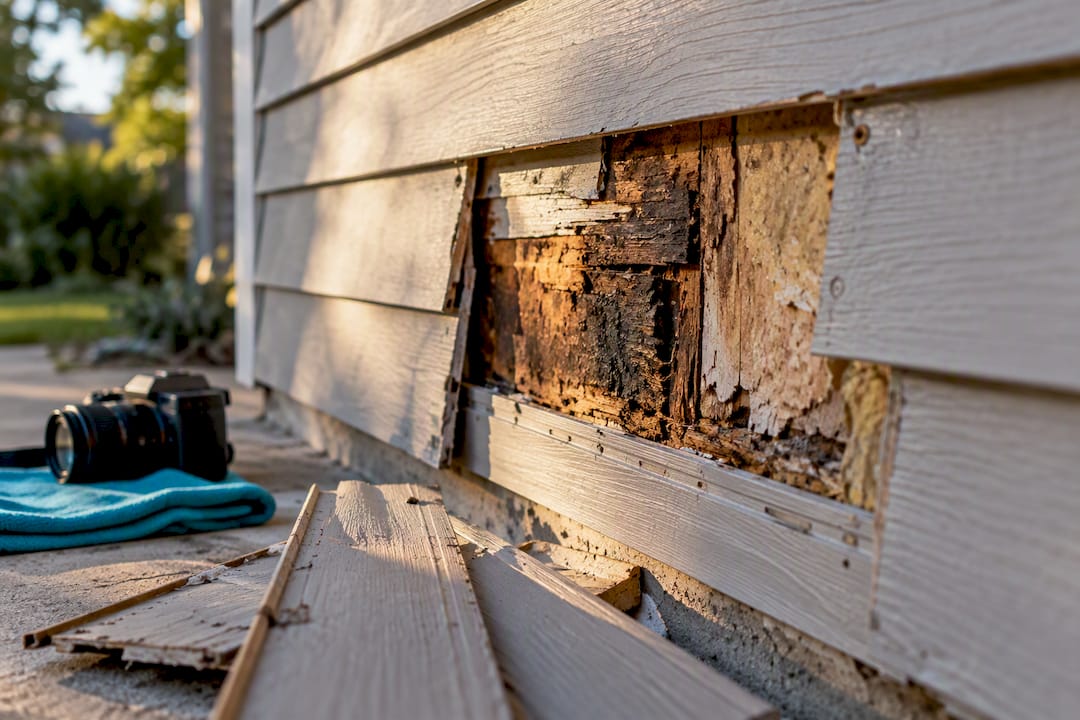
- Damage from lack of maintenance, like rot behind unsealed seams
- Animal damage, including woodpeckers or chewed corners
- Preexisting damage that predates your policy or a prior claim
Why the distinction matters: an adjuster comparing a fresh hail dent to years-old warping can usually tell the difference in seconds. Photos from before the storm, or even old listing photos of your home, can work against you if they show damage that already existed. Keeping basic maintenance records and periodic exterior photos gives you a paper trail proving the damage is new, not neglected.
How Do You Document Siding Damage for a Claim?
Strong documentation is what separates a paid claim from a denied one, and it starts the moment you spot the damage. Thorough documentation and prompt reporting are consistently cited as the biggest factors in claim outcomes.
- Photograph every elevation of the house, wide shots first, then close-ups of each damaged section.
- Place a ruler, coin, or tape measure next to dents or punctures so scale is obvious in the photo.
- Note the date and time on your phone's camera settings so the metadata backs up when you found it.
- Pull a weather report for the storm date to tie the damage to a specific event.
- Photograph related exterior damage, like dented gutters, dinged AC units, or damaged screens, since adjusters look for these secondary indicators to confirm a storm actually happened.
- Save receipts for any temporary repairs, like tarping a hole to stop water intrusion.
- Schedule a written inspection from a licensed contractor before or right when you file, with a line-item scope of the damage.
Pro Tip: Don't clean up debris or paint over damage before the adjuster sees it. A tidy yard is nice, but it can wipe out the visual evidence that made your claim easy to approve.
How Do You File a Siding Insurance Claim?
Filing follows a fairly predictable sequence, whether you call your agent, use a mobile app, or file online.
- Report the damage promptly. Most insurers expect notice within a defined window, and waiting too long is one of the fastest ways to get a claim denied or delayed.
- Get your claim number in writing. Save the email or text confirmation, and ask directly whether your state or policy sets a specific reporting deadline.
- Schedule the adjuster inspection. Be present if you can, and hand over your photos, weather report, and contractor's scope so the adjuster isn't working from a five-minute walk-around alone.
- Review the estimate. Compare it line by line against your contractor's takeoff. Gaps here are common and fixable.
- Submit supplements if needed. If your contractor finds damage the adjuster missed, once siding comes off, this is where a second estimate earns its value.
- Complete the repair and submit receipts. If you have a replacement cost policy, this step triggers the second check.
Most straightforward siding claims resolve within a few weeks of the inspection, though supplements and material backorders can stretch the timeline. Keep every email and call log; a paper trail is your best leverage if the process stalls.
Adjuster and Contractor Estimates Don't Match. Now What?
Disagreements between an adjuster's estimate and a contractor's scope are common, and they're rarely a sign anyone is acting in bad faith. Adjusters often work from general software pricing, while a contractor's written takeoff listing linear feet, panel counts, and exact material specs is the strongest evidence for winning a supplement.
When the numbers don't line up:
- Request a re-inspection and bring your contractor along if the insurer allows it.
- Submit a written supplement with side-by-side photos and a line-item comparison, not just a total dollar difference.
- Ask specifically what was excluded and why, rather than accepting a vague "that's our estimate."
Watch for red flags that suggest you need to escalate: a lowball offer with no line-item breakdown, a denial that cites "wear and tear" without an inspection photo to back it up, or an adjuster who won't return calls for weeks. Any of those is a signal to request a supervisor review or file a complaint with your state insurance department.
Pro Tip: Ask your contractor for a written comparison document showing exactly where their scope diverges from the adjuster's, line by line. It turns a vague dispute into a specific, defensible ask.
ACV vs RCV: What Actually Determines Your Payout?
Your settlement amount depends heavily on whether your policy pays actual cash value or replacement cost value. ACV pays the depreciated value of your old siding; RCV pays what it costs to replace it new, though RCV policies commonly release payment in two steps: an initial ACV check, then the recoverable depreciation once you submit repair receipts.
A meaningful share of homeowners never collect that second check simply because nobody reminds them to ask for it. That gap can mean thousands of dollars left unclaimed after repairs are already paid for out of pocket.
A few more numbers worth checking before you file:
- Your deductible comes out of the total regardless of ACV or RCV, so a small repair under a $1,500 deductible may not be worth filing at all.
- Percentage-based deductibles (common in wind or hail zones) can run 1 to 5 percent of your dwelling coverage, not a flat dollar figure.
- If your siding is discontinued or hard to match, some insurers offer optional matching siding coverage to replace undamaged sections for a consistent look, though limits vary by carrier.
What a Local Roofing and Siding Contractor Sees on These Claims
We consistently tell homeowners to get a written contractor scope and at least two or three estimates before filing, since that paperwork is what makes a supplement request credible instead of a guess. Damage often hides behind panels until they come off. When our crews find rot or cracked sheathing during a siding tear-off, we photograph it immediately and preserve the material for the adjuster. That newly discovered damage almost always qualifies for a supplement, provided you document it before the old material hits the dumpster.
What Homeowners Get Wrong About the Siding Claim Process
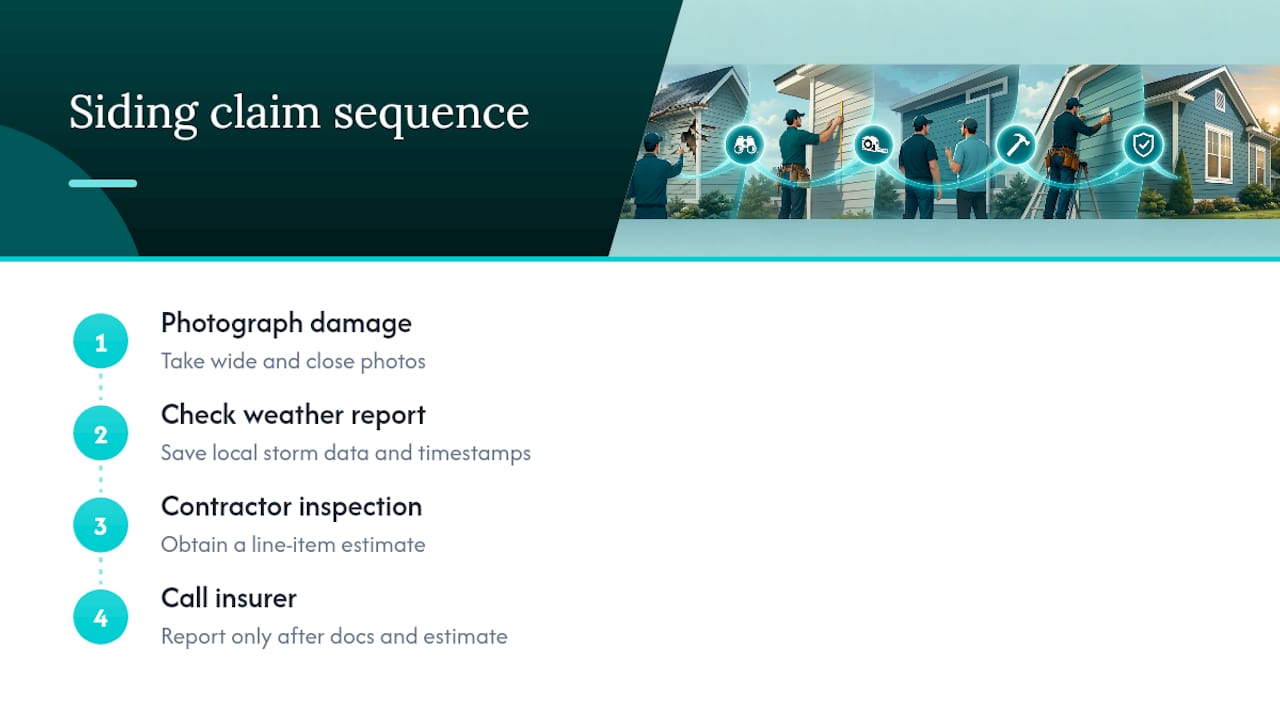
The advice you'll find most often boils down to "call your insurer and hope." That's backwards. The claims that actually get paid fully are the ones where the homeowner acted like an investigator before ever picking up the phone: photos first, weather report second, contractor inspection third, and only then a call to the insurer.
The overlooked part isn't documentation, though. It's knowing when not to file. A hairline crack near your deductible threshold can cost you more in future premium increases than the repair is worth. Run the math before you open a claim, not after.
The other blind spot is recoverable depreciation. Homeowners treat the first ACV check as the final word and never submit receipts for the second payment. If your policy is RCV, that second check is yours by contract, not a favor. Chase it.
Estimate gaps between adjusters and contractors get treated like confrontations. They're not. A clean, line-item supplement resolves most of them without a single argument.
— Dan
How Budget Roofing & Siding Helps With Your Claim
Filing a siding claim gets a lot less stressful when someone who reads adjuster estimates for a living is standing next to you. Budget Roofing & Siding offers free inspections that document the damage and produce a detailed, line-item estimate you can hand directly to your adjuster.

We help homeowners across Central Texas walk through the filing process, spot supplement opportunities the first inspection missed, and understand exactly what ACV versus RCV means for their payout. We always encourage getting multiple estimates so you know you're getting real value, not just our word for it. If you're in the Live Oak, Schertz, or La Vernia area and your siding took a hit in the last storm, start with a free inspection through our Insurance Made Easy program before you file, or contact us anytime through Budgetroofingandsiding.
This article is general information, not a substitute for advice from a qualified financial advisor. Consult a qualified financial professional about your own circumstances before acting on anything here.
Sources
- Does Homeowners Insurance Cover Siding? | Progressive
- Siding Storm Damage: Is It an Insurance Claim? | SRS
- How to Get Homeowners Insurance to Pay for New Siding - LegalClarity
- Home siding replacement coverage | American Family Insurance
FAQ
Does Insurance Cover Siding Repair?
Yes, most homeowners policies cover siding repair when a covered peril like hail, wind, fire, or vandalism causes the damage. Coverage typically applies up to your dwelling limits minus your deductible, while wear and tear or lack of maintenance are excluded.
What Should You Avoid Saying During a Home Insurance Claim?
Avoid guessing at a cause, admitting the damage is old, or estimating a dollar amount before you have documentation. Stick to facts: when you noticed the damage, what the weather report shows, and what your contractor's inspection found.
Can You Replace Just Sections of Damaged Siding?
Yes, insurers often approve partial repairs when the damage is limited to specific panels or one elevation. If your siding is discontinued or the replacement won't match, ask about optional matching coverage that can fund replacing undamaged sections for a consistent look.
What Types of Damage Does Homeowners Insurance Typically Exclude?
Three common exclusions are wear and tear from age or sun exposure, damage caused by lack of maintenance, and damage from animals like woodpeckers or rodents. Preexisting damage from before your policy started is also routinely denied.
How Long Do I Have to File a Siding Insurance Claim?
Reporting windows vary by insurer and state, but many carriers expect notice within 30 to 60 days of discovering the damage. Filing sooner rather than later strengthens your claim and reduces the risk of a denial based on late reporting.