
Most residential asphalt shingle roof replacements take just 1 to 3 days of on-roof work. The full project, from signed contract to final inspection, typically spans 2 to 4 weeks. Three things push that window wider: permit turnaround, weather delays, and how long your chosen material takes to arrive.
TL;DR:
- Permit approval and material delivery times vary greatly depending on location and material choice, potentially adding several weeks to the project timeline.
- Larger or more complex roofs, such as steep pitches or multiple layers, typically extend installation to 2–3 days on-site with total project durations reaching 4–6 weeks.
- Homeowners can avoid delays by securing permits immediately, confirming material lead times in writing, and submitting HOA approvals early in the process.
- The five key phases of roof replacement include inspection, material selection, permitting, tear-off and installation, and final inspection, with permitting often being the slowest step.
- Specialty materials like slate or imported tiles usually require significantly longer lead times, with installation times remaining roughly consistent across material types once on-site.
Table of Contents
- How Long Does Roof Replacement Take From Start to Finish?
- What Are the 5 Stages of a Roof Replacement?
- How Long Does Each Roofing Material Take to Install?
- What Slows Down or Speeds Up a Roof Replacement?
- How Can Homeowners Avoid Roof Replacement Delays?
- Budget Roofing and Siding: How We Keep Projects on Schedule
- What Install Days Actually Look Like
- Ready for a Roof Replacement Quote?
- Sources
- FAQ
How Long Does Roof Replacement Take From Start to Finish?
The install itself is fast. Getting to install day is the part that eats calendar time.
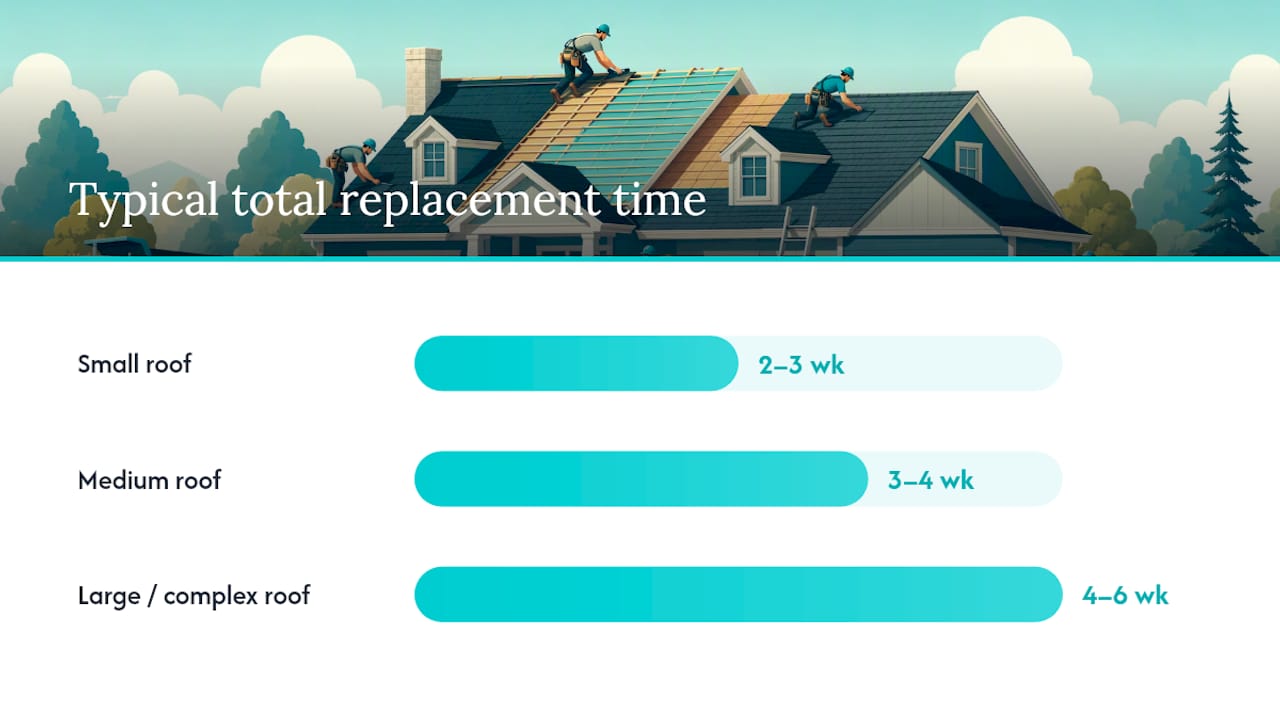
"On-roof" time means the days a crew is physically tearing off old material and installing new. "Contract-to-close" means everything, from the estimate you sign to the moment your local building department signs off on the finished work. A typical asphalt-shingle job runs 1 to 3 days on the roof, with the full window landing between 3 and 6 weeks once you count permitting and material ordering.
Roof size changes the math, but not by as much as people expect:
- Small roof (under 1,500 square feet): often 1 day on-roof, 2 to 3 weeks total
- Medium roof (1,500 to 2,500 square feet): 1 to 2 days on-roof, 3 to 4 weeks total
- Large or complex roof (steep pitch, multiple layers, dormers): 2 to 3 days on-roof, 4 to 6 weeks total
A homeowner who signs a contract on a Monday in April, with permits already pulled and shingles in stock, could have a finished roof and a passed inspection within three weeks. Swap in a metal roof or an HOA approval requirement, and that same homeowner is looking at closer to two months.
What Are the 5 Stages of a Roof Replacement?
Every roof replacement moves through the same five phases, whether it takes three weeks or eight.
- Inspection and estimate. A contractor climbs up, checks the decking, measures the roof, and typically hands you a written estimate within 1 to 3 business days.
- Material selection and contract. Once you sign, materials should be ordered immediately. This is the single biggest lever for shortening your total timeline.
- Permits and material delivery. Municipal permit turnaround ranges from a single business day to as long as six weeks depending on your jurisdiction, and it usually runs in parallel with the material's manufacturing or shipping lead time.
- Tear-off, decking inspection, and installation. Crews strip old shingles, inspect the deck for rot or soft spots, replace any damaged sheathing, then install underlayment, flashing, and new roofing material.
- Cleanup and final inspection. Debris and nail sweeps happen the same day install wraps. A municipal inspector then reviews the work before the permit officially closes.
Pro Tip: Ask your contractor exactly which phase you're in at any given moment. A vague "we're working on it" answer usually means nobody has actually checked the permit portal in a week.
How Long Does Each Roofing Material Take to Install?
Material choice affects two separate clocks: how long it takes to arrive, and how long it takes to install once it's on-site. Asphalt wins on both counts, which is why it remains the default for most homeowners on a schedule.
| Material | Procurement lead time | On-roof install time (average home) |
|---|---|---|
| Asphalt architectural shingle | 1 to 7 days | 1 to 3 days |
| Standing seam metal | 2 to 4 weeks | 2 to 4 days |
| Clay or concrete tile | 3 to 6 weeks | 3 to 5 days |
| Cedar shake | 2 to 4 weeks | 2 to 4 days |
| Slate | 4 to 8 weeks | 4 to 7 days |
Roof pitch and layer count matter more than square footage alone, with steep pitches and multiple shingle layers generally slowing the work. Decking repairs, when needed, typically add 1 to 3 extra days to any material's install window. A 5 to 6 person experienced crew can still knock out a 2,000 square foot asphalt roof in just 1 to 2 days even with those complications, which shows how much crew sizing affects your actual install date.
What Slows Down or Speeds Up a Roof Replacement?
Some delays are out of anyone's control. Others are avoidable if you know to ask about them before signing.
- Weather and seasonal demand. Spring and post-storm-season bookings fill up fast in most markets, and a smart contractor builds a 1 to 2 week weather buffer into any quoted schedule.
- Permits and HOA review. Municipal permits vary wildly by jurisdiction, and homeowners associations with architectural review boards can add 2 to 12 weeks before work even starts.
- Hidden decking damage. Rot or soft spots found during tear-off almost always mean a change order and a short pause while replacement sheathing gets sourced.
- Crew size and site access. A driveway blocked by a boat trailer or a roof with no clear staging area slows down material handling more than most homeowners anticipate.
- Specialty material supply chains. Custom metal profiles, imported tile, and slate all run on manufacturer schedules that a contractor can't rush.
How Can Homeowners Avoid Roof Replacement Delays?
Most schedule slippage traces back to a handful of avoidable gaps. Here's what to lock down before the crew ever shows up.
- Get the permit filed on contract-signing day. There's no reason for this to wait, and jurisdictions with slower turnaround need every extra day you can bank.
- Confirm material lead times in writing. Have the contractor commit to a delivery window, then confirm materials are pre-staged 24 hours before install rather than arriving the same morning.
- Set a weather buffer up front. Ask what the emergency tarp protocol looks like if rain rolls in mid-tear-off.
- Request documented change-order pricing. Get per-sheet decking replacement costs in writing before, not after, your deck gets opened up.
- Start HOA or architectural review immediately. If you live in a managed community, submit for approval the same week you get your estimate, not after you've picked a color.
Pro Tip: A contractor who hesitates to put permit timing and change-order pricing in writing is telling you something about how the rest of the project will go.
Budget Roofing and Siding: How We Keep Projects on Schedule
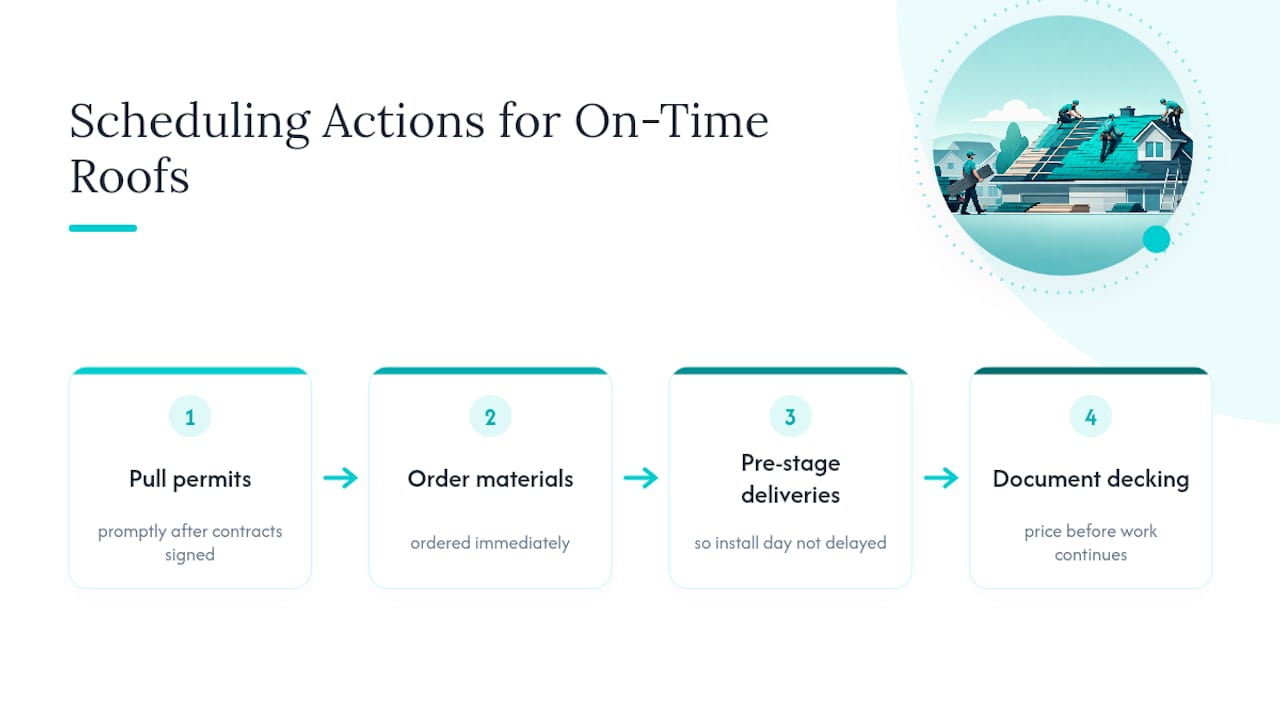
A reputable roofing contractor pulls permits promptly after contracts are signed, orders materials immediately, and pre-stages deliveries so install day isn't delayed by delivery arrivals. Decking issues found during tear-off should be documented and priced before any work continues, helping homeowners avoid surprise change orders mid-project.
A clear pricing guarantee can give homeowners cost certainty going in, and expert insurance-claims guidance helps storm-damage clients avoid the back-and-forth that often stalls claim-driven repairs. Between clear scheduling practices and support navigating adjusters, the goal is a timeline that holds up from the first estimate to the final inspection.
What Install Days Actually Look Like
Day one is site protection, tear-off, and a decking inspection where the crew flags any rot before moving forward. Day two or three brings underlayment, flashing, and shingle installation, wrapped up with a full debris sweep. A project on schedule looks like this: materials already staged in the driveway, a dumpster on site before tear-off starts, and a quick crew brief each morning. If none of that is happening by day two, ask for a daily status update and a documented plan to get back on track.
— Dan
Ready for a Roof Replacement Quote?
This contractor provides a straightforward alternative to uncertain contractor quotes. A pricing guarantee means you get a clear number instead of a bid designed to be negotiated down, and insurance-claims support helps storm-damage homeowners manage adjuster paperwork more easily.

Core services cover roofing replacements and repairs, siding work, and insurance claim guidance for Central Texas homeowners. If your roof took storm damage or you're just past the point where repairs make sense, request a free estimate and ask for a written permit-and-lead-time plan up front, so you know your schedule before any tear-off begins. Homeowners in the Schertz area can also check current local service availability before booking.
Sources
- How to Determine a Roofing Project Timeline (Contractor Guide 2026)
- Roof Replacement Timeline (Day by Day) | Local Roofing Help
- Roofing Project Timeline Calculator | SubcontractorHub
FAQ
What Is the Average Timeframe for Roof Replacement?
Most asphalt shingle roofs take 1 to 3 days of actual on-roof work, with the full project running 2 to 4 weeks from signed contract to final inspection. Specialty materials or permit delays can push that closer to six weeks.
How Long Does a Roof Last Before It Needs Replacing?
Lifespan depends heavily on material and climate. Asphalt shingles typically need replacement after many years of wear, and if your roof shows granule loss, curling edges, or active leaks, it's worth getting a professional inspection rather than waiting for a failure.
What Are the Stages of a Roof Replacement?
The five stages are inspection and estimate, material selection and contract signing, permitting and material delivery, tear-off and installation, and final cleanup with inspection. Budget Roofing and Siding sequences permits and material orders early in this process specifically to compress the middle stages.
Should I Replace My Roof After 15 Years?
Not automatically. Age alone doesn't tell the whole story. A roof showing no leaks, minimal granule loss, and intact flashing may have several good years left, but it's a reasonable point to schedule an inspection and start budgeting for replacement.