James Hardie fiber cement siding, including its ColorPlus factory-finished boards, is the strongest choice for homeowners who plan to stay put 10 or more years and want siding that shrugs off Central Texas hail, humidity, and heat without constant upkeep. It costs more upfront than vinyl, but a poor installation will hurt you more than the product ever will. Get it installed right, by a qualified crew, and it becomes one of the few exterior upgrades that actually pays you back.
TL;DR:
- Proper installation by experienced contractors following James Hardie's specific instructions is critical to prevent issues like moisture trapping, cracking, or warping.
- Costs for installed Hardie siding generally range from $16 to $20 per square foot, with long-term value increasing if you stay in the home more than a decade.
- The warranty coverage depends on the product's substrate and finish, but labor coverage mainly relies on a credentialed installer with recognized certification.
- Maintaining James Hardie siding involves regular washing and timely recaulkings, while avoiding DIY repainting to preserve factory finish warranty.
- Product choices like ColorPlus or primed boards influence long-term appearance, with factory-finished options providing better fade resistance and longevity.
Table of Contents
- What Is James Hardie Siding? Product Lines and Finish Options
- How Durable Is James Hardie Siding, and What Does the Warranty Cover?
- How Installation Affects Performance and How to Choose a Contractor
- What Does James Hardie Siding Cost, and When Is It Worth It?
- How to Maintain James Hardie Siding So It Lasts
- How Long Does a James Hardie Siding Project Take?
- Common James Hardie Siding Problems and How to Fix Them
- Does James Hardie Siding Work With My Home's Architectural Style?
- Our Take: Why Installation Matters More Than the Brand Name
- Get a James Hardie Siding Estimate for Your Central Texas Home
- Sources
- FAQ
What Is James Hardie Siding? Product Lines and Finish Options
James Hardie siding is a fiber cement product made from cellulose fiber, sand, and cement, engineered to resist fire, moisture, and pests better than wood while holding paint longer than vinyl. The company builds its lineup around a handful of core product lines, each suited to a different look.
- HardiePlank: The classic horizontal lap board, available in several widths and textures, used on the vast majority of American homes that choose fiber cement.
- HardiePanel: Vertical panel siding for board-and-batten looks, farmhouse exteriors, and modern facades.
- HardieShingle: Staggered or straight-edge panels that mimic cedar shake without the rot risk.
- HardieTrim and soffit boards: Matching trim, fascia, and soffit pieces that let the whole exterior read as one finished system rather than mismatched parts.
The bigger decision is finish. ColorPlus Technology applies a baked-on factory finish with a separate limited warranty covering color, and it resists fading and chipping far better than field-applied paint, according to James Hardie's own product documentation. Primed boards cost less and give you total control over paint color, but you take on the labor and cost of painting, and repainting sooner than you would with ColorPlus. If you want a specific, uncommon color, primed is often the practical route. If you want to set it and forget it for a decade or more, ColorPlus is worth the premium.
How Durable Is James Hardie Siding, and What Does the Warranty Cover?
Fiber cement's real advantage over vinyl and wood is that it does not burn, warp, or rot the way those materials can. James Hardie boards are noncombustible, which matters directly in Central Texas wildfire-adjacent zones, though the company is careful to note that field-applied paints and coatings do not carry the same fire rating as the substrate itself, per ASTM testing standards referenced in its technical literature.
Climate-Engineered Formulation: James Hardie's HardieZone System tailors the product formula to regional climate. HZ5 boards are formulated for freeze-thaw and wet climates, while HZ10 is built for hot, humid regions, which is exactly the profile of San Antonio and the surrounding Hill Country.
On warranty, here's what actually applies:
- The substrate carries a 30-year, non-prorated limited warranty on the base fiber cement product.
- ColorPlus finish carries its own separate limited finish warranty, distinct from the substrate coverage.
- The installer matters here. Labor coverage and how much of the warranty passes through to you depends on whether your contractor holds a manufacturer-recognized installation credential, a detail too many homeowners never ask about until something goes wrong.
James Hardie products also carry ICC-ES recognition and code approvals in many jurisdictions, which your installer should be able to reference for local permitting.
How Installation Affects Performance and How to Choose a Contractor
Fiber cement siding is only as good as the crew that hangs it. James Hardie's own installation instructions are specific, and skipping steps is the single biggest reason homeowners see problems years later.
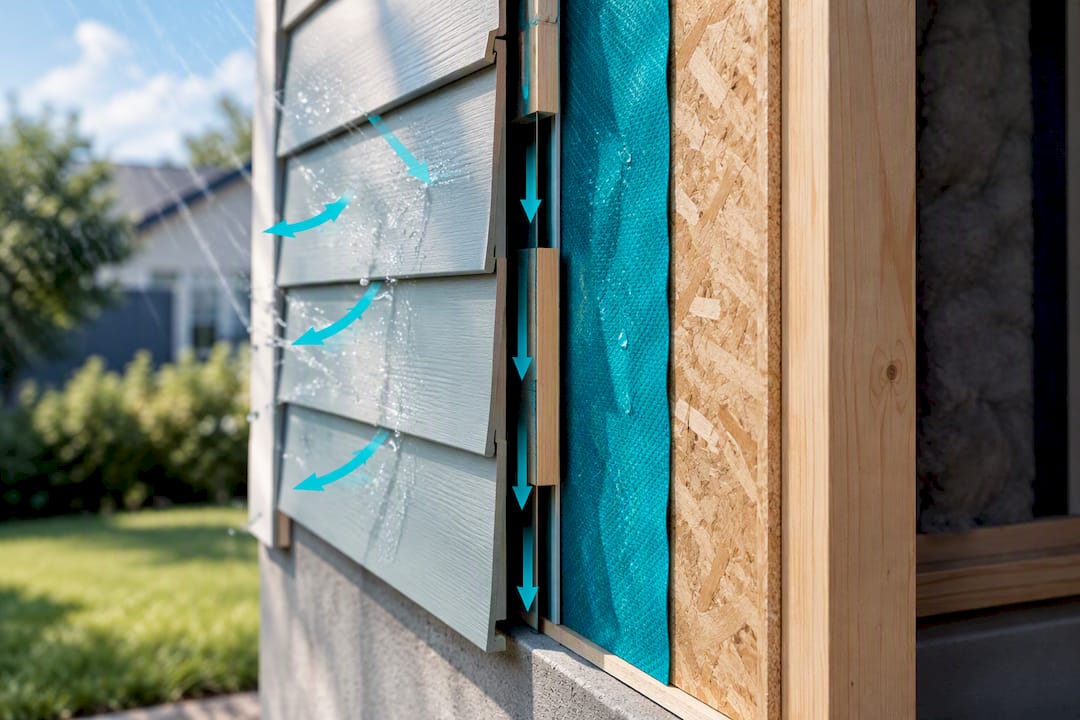
- Water-resistive barrier is mandatory. Every installation needs a code-compliant barrier behind the siding, not an afterthought.
- Rainscreen gap is recommended. A small air gap between the barrier and the siding lets moisture escape instead of getting trapped, which matters enormously in humid Texas summers.
- Fasteners have rules. James Hardie specifies fastener type, spacing, and placement, and using the wrong nail or driving it in the wrong spot can void coverage.
- Clearance and gapping matter. Boards need proper clearance from grade, roofing, and other trim to avoid trapping water against the material.
When you're vetting a contractor, ask directly whether they participate in a James Hardie installer program, how many Hardie projects they've completed in your climate zone, and whether they'll provide references. Get the scope of work in writing, including any substrate or sheathing repair, before a single board goes up.
Pro Tip: Ask your contractor to show you, in writing, exactly what warranty tier you'll receive as the homeowner. A "pass-through" warranty from a certified installer is worth more than a lower bid from a crew that isn't recognized by the manufacturer.
Red flags to walk away from: missing flashing details around windows and doors, caulk applied where a proper flashing should be, and any contractor who can't explain the rainscreen approach they're using.
What Does James Hardie Siding Cost, and When Is It Worth It?
Installed James Hardie siding commonly runs in the range that regional contractor pricing examples put around $16 to $20 per square foot in some markets, though your quote will shift based on trim complexity, tear-off scope, and local labor rates. For a 2,000 square foot home, the total project cost can vary widely depending on several factors, which is exactly why getting more than one detailed estimate matters before you sign anything.
The upfront number is only half the picture. Industry cost-versus-value analysis shows James Hardie typically costs 2 to 3 times more than vinyl at installation, but its longer lifespan and lower maintenance needs can add 5 to 7 percent to a home's resale value, making it a stronger financial play for owners staying 15 or more years.
- Vinyl needs replacement sooner and can warp in extreme heat.
- Engineered wood siding needs more frequent sealing and is more vulnerable to moisture damage over time.
- Fiber cement holds paint and color longer and resists pests that damage wood-based products.
The decision rule is simple: if you're staying in the home more than a decade, or your property sees serious sun, storm, or humidity exposure, the premium pays for itself in avoided replacement cycles.
How to Maintain James Hardie Siding So It Lasts
Fiber cement is low maintenance, not no maintenance. A little care keeps the finish looking factory-new and keeps your warranty intact.
- Wash every 6 to 12 months with a garden hose and soft brush; James Hardie's maintenance guidance explicitly warns against high-pressure washing.
- Avoid abrasive cleaners and acidic solutions, which can degrade the factory finish over time.
- Keep de-icing salts and harsh chemicals away from the base of the siding.
- Recaulk joints using a permanently flexible sealant that meets ASTM C920 or C834 standards; caulk breaks down faster than the boards do and needs periodic renewal.
Pro Tip: Walk your exterior once a year and check caulk lines at trim and window edges. Cracked or shrinking caulk is the most common early failure point, not the siding itself.
ColorPlus finish is not designed for DIY repainting within its warranty period, and doing so can affect your finish coverage. If a board gets cracked or impact-damaged, replacing that single piece is almost always cheaper and cleaner than trying to patch and repaint it to match.
How Long Does a James Hardie Siding Project Take?
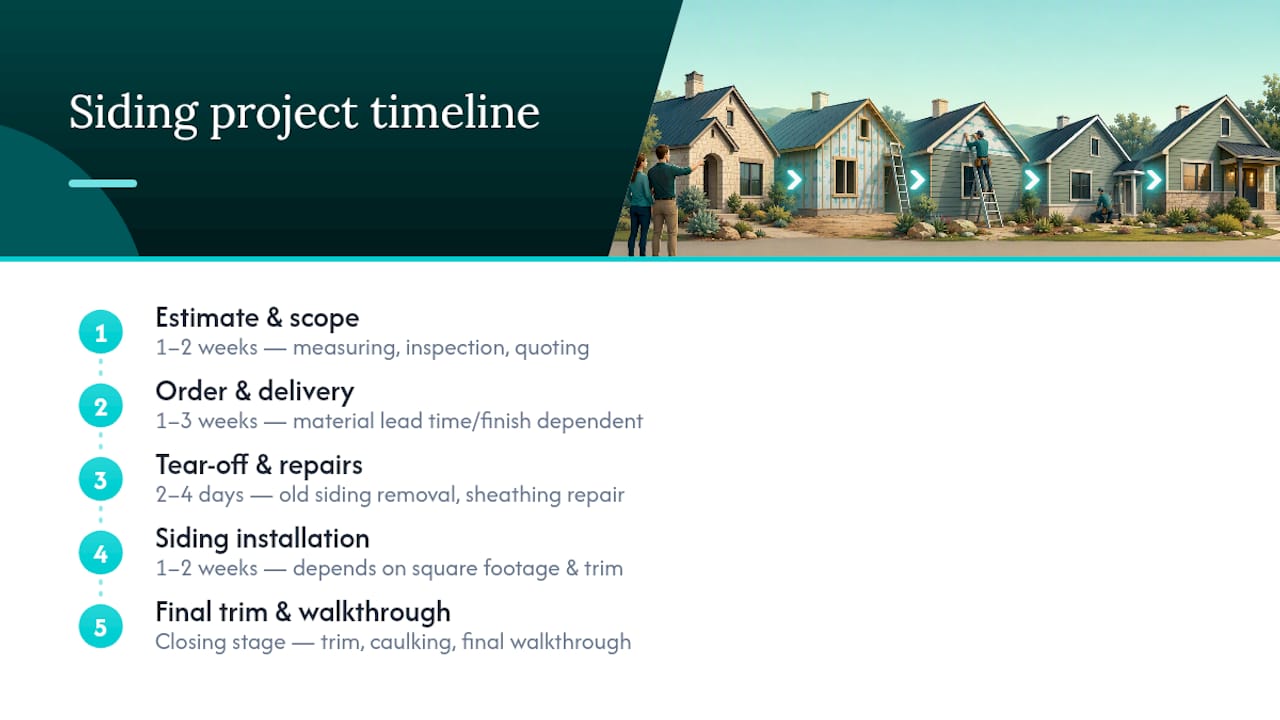
Most full-home siding replacements run 3 to 5 weeks from signed contract to finished install, though your actual timeline depends on house size, tear-off scope, and permitting in your area. Material lead time is often the longest variable. ColorPlus factory-finished boards in specific colors can take longer to arrive than primed boards, especially during peak remodeling season in spring and fall.
Here's roughly how the timeline breaks down. The estimate and scope-of-work phase, including measuring, substrate inspection, and quoting, typically takes one to two weeks. Ordering and material delivery adds another one to three weeks depending on the product and finish selected. Tear-off of old siding and any necessary sheathing repair usually takes two to four days on an average single-story home. Actual installation of the new siding runs anywhere from one to two weeks depending on square footage and trim detail. Final trim, caulking, and a walkthrough close out the project.
Weather is the biggest wildcard in Central Texas. Installers won't hang siding in heavy rain, and a stretch of severe storms can push a project back by several days. Insurance-related replacements, where storm damage triggers a claim, often add time upfront while the claim gets approved, but once materials are on site, the physical installation moves at the same pace as any other project.
Ask your contractor for a realistic timeline in writing before you sign, including what happens if backordered materials delay the start date.
Common James Hardie Siding Problems and How to Fix Them
Most issues with James Hardie siding trace back to installation mistakes, not the product itself. Knowing what to watch for helps you catch problems before they get expensive.
Moisture behind the boards is the most serious issue, usually caused by a missing or improperly lapped water-resistive barrier, or no rainscreen gap. Signs include staining, a musty smell near exterior walls, or soft spots in sheathing found during a later inspection. The fix requires pulling affected boards, correcting the barrier, and reinstalling.
Cracking at fastener points happens when nails are overdriven or placed too close to board edges, against manufacturer specification. Individual boards can usually be replaced without redoing the whole wall.
Caulk failure shows up as gaps or peeling at joints and trim, and it is normal wear rather than a defect. Recaulking with an ASTM-rated flexible sealant resolves it.
Color fading or chalking on primed boards that were never painted, or were painted with low-quality exterior paint, is common. ColorPlus boards rarely show this problem, which is part of why the factory finish carries a premium.
Buckling or warping, though rare with fiber cement compared to wood or vinyl, can occur if boards were installed without proper clearance from grade or without the specified gap at butt joints, since the material needs room to handle minor expansion.
Most of these problems are catchable at a walkthrough with an experienced installer, which is exactly why the crew you hire matters more than the brand of board on the truck.
Does James Hardie Siding Work With My Home's Architectural Style?
James Hardie's biggest design advantage is flexibility. HardiePlank's varied widths and textures suit traditional ranch homes and craftsman bungalows just as well as they suit new-build farmhouse exteriors. HardiePanel's clean vertical lines have become a defining feature of the modern farmhouse and contemporary styles that dominate new construction across Central Texas right now. HardieShingle covers the cottage and coastal-inspired look without the maintenance burden of real cedar shake.
Mixing product lines on a single home is increasingly common and often looks intentional rather than mismatched: HardiePanel on a gable accent with HardiePlank on the main body, for instance, or shingle siding on a porch gable against lap siding everywhere else. Trim and soffit pieces are designed to match across the whole product family, so those transitions look clean rather than patched together.
If you're weighing broader exterior panel options beyond fiber cement, this homeowner's guide to wall panel systems covers installation approaches and visual examples worth reviewing before you commit to a final design.
Color selection through ColorPlus adds another layer of design control, since factory-matched trim and siding colors are formulated to stay consistent over time in a way that field-mixed paint often can't match, especially with an exterior remodel.
Our Take: Why Installation Matters More Than the Brand Name
Homeowners spend weeks researching which siding brand to buy and almost no time vetting who's going to install it. That's backwards. James Hardie's engineering is genuinely strong, but a warranty is only as good as the crew that followed the spec sheet.
Some contractors have installed James Hardie siding in Central Texas homes long enough to see patterns in callbacks, which almost always trace to skipped water-resistive barriers or wrong fasteners, never to the boards. It is advised to follow James Hardie's written specs on every job and for homeowners to get more than one estimate. If two bids differ significantly, homeowners are advised to ask why, as answers may be in the fine print of the warranty.
— Dan
Get a James Hardie Siding Estimate for Your Central Texas Home
If your siding is aging out, storm-damaged, or you're just tired of repainting every few years, Some companies offer a clear path forward without guesswork, with pricing guarantees that allow customers to compare quotes confidently, and provide assistance with insurance-claim paperwork if storm damage is involved.

During a free estimate, existing siding and sheathing are inspected, any substrate repair is scoped out before work begins, and homeowners are informed about warranty coverage based on installation quality, with a clear written scope of work provided. We handle everything from a single wall repair to a full siding replacement, and if your project overlaps with roof damage, we cover that too through our roofing services.
Ready to see what a properly installed Hardie project actually costs for your home? Request your free estimate and get a straight answer, not a sales pitch.
Sources
- Cost vs. value and cost-efficiency discussion (JLC Online)
- HardieZone® HZ5 care and maintenance guide (James Hardie)
- HardiePanel vertical siding installation instructions (Buildsite / James Hardie PDF)
FAQ
What Is the Downside of James Hardie Siding?
The main downsides are higher upfront cost compared to vinyl and a heavier installation process that requires an experienced crew familiar with fiber cement fastening and moisture-barrier requirements. A poor install, not the material itself, is the most common source of long-term problems.
How Much Does Hardie Siding Cost for a 2,000 Square Foot House?
Pricing varies widely by region, trim complexity, and tear-off scope, but regional contractor examples put installed costs around $16 to $20 per square foot in some markets. Budget Roofing & Siding provides free, project-specific estimates rather than flat per-square-foot pricing, since actual costs depend on your home's condition.
Is There a Better Siding Than a Hardie Board?
No single material beats fiber cement on every metric. Vinyl costs less upfront, and engineered wood offers a different aesthetic, but cost-versus-value data shows James Hardie's durability and low-maintenance profile typically outperforms both over a 15-plus year horizon.
Do You Put Plywood Under Hardie Board Siding?
You need proper sheathing and a code-compliant water-resistive barrier underneath Hardie siding, and plywood or OSB sheathing is common depending on your home's construction. James Hardie's installation instructions specify the barrier and rainscreen requirements regardless of the sheathing type used.