Choose asphalt shingles if your priority is upfront cost and easy repairs; choose metal if you plan to stay in your home long term and want fewer maintenance calls. Asphalt wins on price and repair simplicity, metal wins on lifespan and lower lifetime cost, and neither is the "right" answer until you factor in your climate, your roof's pitch, and how many years you actually expect to own the house.
TL;DR:
- Metal roofs typically last 40 to 70 years, outlasting two to three asphalt roof replacements over a 50-year ownership period, justifying their higher initial cost.
- Installation complexity causes metal roofing projects to take longer, often several days to a week, especially on complex or steep roofs requiring precise seam work.
- Costs for roof replacement vary widely, with asphalt shingles averaging $6,885 to $23,993 and metal roofs ranging from $25,721 to $89,600, but bids differ mainly due to scope inclusions like tear-off, repair, and underlayment.
- Proper inspection and detailed line-item estimates that specify scope are key to comparing bids accurately, as overlooked costs can negate apparent savings.
- Metal roofs are less maintenance-intensive and more durable, but they can dent from hail or make noise if improperly installed; regular inspections are recommended twice a year and after storms.
Table of Contents
- Asphalt vs Metal Roofing: What Each One Costs to Install
- How Long Does a Metal Roof Really Last Compared to Asphalt Shingles?
- What Does Roof Maintenance Actually Cost Over Time?
- Installation Timelines: Why Metal Takes Longer Than Asphalt
- Metal Roof Pros and Cons vs. Asphalt Shingles
- Energy Efficiency and Sustainability: Cool Roofs and Recycling
- Your Roof-Buying Checklist Before You Sign Anything
- Dan's Take: Match the Roof to How Long You're Staying
- Get a Line-Item Estimate From Budget Roofing & Siding
- Sources
- FAQ
Asphalt vs Metal Roofing: What Each One Costs to Install
The price gap between these two materials is bigger than most homeowners expect, and it's the first thing that shocks people getting quotes for the first time. A typical asphalt shingle replacement on a standard-size home runs roughly $6,885 to $23,993 installed, while a comparable metal roof project runs $25,721 to $89,600. That's not a small gap. Metal can cost two to four times more than asphalt on the same house.
But the sticker price on a bid rarely tells the whole story. Two contractors quoting "the same roof" can land tens of thousands of dollars apart, and the difference usually isn't the shingles or panels themselves. It's what's hiding underneath the number.
Line items that swing an estimate far more than the material choice itself:
- Tear-off and disposal of the old roof (skipped entirely on some low bids)
- Deck repair for rotted or soft plywood found once the old roof comes off
- Underlayment quality and code-required ice-and-water protection
- Flashing around chimneys, vents, and valleys
- Permit fees, which vary by city and county
- Labor complexity tied to roof pitch and the number of penetrations
If one estimate is dramatically lower than the others, ask what it excludes before you assume it's the better deal. The NRCA's guidance on reroofing is blunt about this: bids aren't comparable unless they list the same scope items, side by side. A $9,000 asphalt quote with new underlayment and flashing beats a $7,500 quote that skips both, even though the second number looks better on paper.
The lifecycle math is where metal starts making sense for some homeowners. Spend more now, and you may not touch that roof again for decades, while an asphalt roof might need full replacement twice in the time one metal roof lasts.
How Long Does a Metal Roof Really Last Compared to Asphalt Shingles?
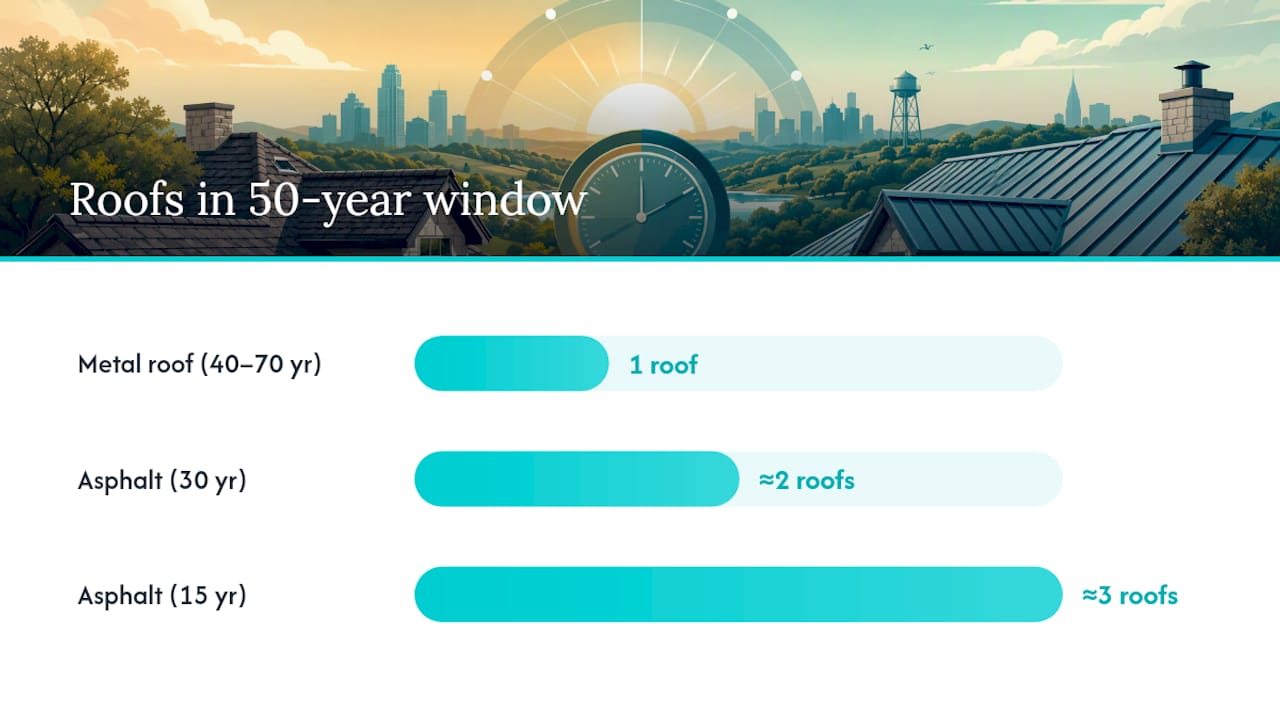
Asphalt shingles typically last 15 to 30 years, depending on the product tier and your climate. Metal roofing commonly lasts 40 to 70 years or more, which is why homeowners planning to stay put for decades often lean that direction despite the higher install cost.
The gap in numbers: a metal roof can outlast two to three full asphalt roof replacements over a 50-year ownership window, even before factoring in labor and disposal costs each time.
Those ranges assume decent installation and normal weather exposure. Real-world lifespan depends heavily on details most homeowners never think to ask about. Ventilation, underlayment quality, and flashing work all affect how close a roof gets to its theoretical maximum, and the NRCA notes that installation quality often matters more than the headline lifespan number printed on a product's warranty card.
Each material fails in its own predictable way:
- Asphalt shingles lose granules over time, curl at the edges as they age, and develop algae streaking in humid climates.
- Metal roofs face corrosion at cut edges or fastener points, loosening screws on exposed-fastener panels, denting from hail, and expansion noise as panels move with temperature swings.
Neither failure mode is catastrophic on its own, but ignoring early warning signs turns a small fix into a full replacement faster than most homeowners realize.
What Does Roof Maintenance Actually Cost Over Time?
Both roof types need regular eyes on them, not just after a storm. A twice-yearly inspection, once in spring and once in fall, catches most problems before they become expensive.
A basic inspection routine:
- Check for missing, curling, or lifted shingles, or loose and rusting metal panels and fasteners.
- Look inside the attic for water stains, daylight gaps, or signs of poor ventilation.
- Clear debris from valleys, gutters, and around any roof penetrations.
- Check flashing around chimneys and vents for gaps or rust.
- Photograph any damage right after a hailstorm or high-wind event, before you file an insurance claim.
Small asphalt repairs, like replacing a handful of damaged shingles, are usually the cheapest fix available on either material. Metal repairs tend to cost more per visit because they often require sourcing a matching panel or coil stock, but they're needed less often.
Pro Tip: Never walk on a shingle roof to inspect it yourself in hot weather. The granules shift underfoot and you can do more damage than the storm did. Use binoculars from the ground or hire a professional for anything above a single-story ranch.

Gutter cleaning, moss removal, and minor sealant touch-ups are reasonable DIY tasks on either roof. Flashing repair, structural deck issues, and anything requiring a ladder on a steep pitch belong to a professional.
Installation Timelines: Why Metal Takes Longer Than Asphalt
A standard asphalt roof on an average single-family home typically takes one to three days from tear-off to clean up. Metal roofing usually takes several days longer, sometimes a full week or more, because the work demands more precision.
Standing seam metal panels get fastened using specialized seaming tools, and every valley, ridge, and penetration needs custom-bent flashing rather than the stock pieces asphalt crews use. The difference between exposed-fastener and standing-seam metal systems matters here too. Exposed-fastener panels install faster and cost less, but standing seam's concealed fasteners hold up better long term and take more skilled labor to install correctly.
A few things that stretch either timeline:
- Steep or complex rooflines with multiple valleys and dormers
- A high number of penetrations (skylights, vents, chimneys)
- Deck damage discovered mid-tear-off that needs repair before anything goes back on
- Weather delays, especially common during Central Texas storm season
Metal Roof Pros and Cons vs. Asphalt Shingles
Every material trades one advantage for another. Here's the quick version for anyone trying to decide fast.
Metal roofing:
- Pros: Lasts 40 to 70+ years, holds up well against wind and fire, and much of it is recyclable at the end of its life.
- Cons: Higher upfront cost, can dent from hail depending on gauge and panel type, and expands and contracts with temperature swings, which sometimes causes ticking or popping sounds.
Asphalt shingles:
- Pros: Lower installed cost, straightforward repairs almost any roofer can handle, and a wide range of colors and styles to match nearly any home.
- Cons: Shorter 15 to 30 year lifespan, more frequent maintenance in harsh climates, and old shingles typically end up in a landfill unless a local recycler accepts them.
Product tier changes this list more than people expect. A premium architectural shingle behaves very differently from a builder-grade three-tab shingle, and a heavier-gauge standing seam panel resists dents far better than a thin exposed-fastener panel. Color matters too. Darker roofs of either material absorb more heat, which affects attic temperatures and cooling bills more than the base material choice does.
Energy Efficiency and Sustainability: Cool Roofs and Recycling
Reflectance and emittance, not the material itself, determine how much heat a roof sends back into the sky. Both asphalt shingles and metal panels come in cool-roof versions that meet ENERGY STAR standards, and either can qualify for federal or state incentives depending on the product and your location.
Don't assume metal automatically beats asphalt on energy performance. A dark, unfinished metal panel can absorb just as much heat as a dark shingle. Check the product's actual reflectance rating rather than the material category.
- Cool-rated products, in either material, typically cost more per square foot than standard versions.
- Metal roofing is broadly recyclable at end of life.
- Asphalt shingle recycling exists in some markets but isn't universal, so ask your contractor what happens to your tear-off debris.
Your Roof-Buying Checklist Before You Sign Anything
A good roofing decision follows a sequence, not a gut feeling about which material sounds more impressive.
- Inspect first. Get a real assessment of your current roof's condition before deciding whether you're looking at a repair or a full replacement.
- Decide repair vs. replace based on the extent of damage, not just the age of the roof.
- Require line-item bids that separate tear-off, deck repair, underlayment, flashing, and disposal so you're comparing equivalent scopes, not just bottom-line totals.
- Verify deck and ventilation condition, since both affect how long any new roof will actually last.
- Check warranty terms for both the product itself and the labor, since these often cover different things for different lengths of time.
- Confirm who handles permits and disposal, and get a written payment schedule tied to completion milestones.
Ask any contractor bidding your job what product tier they're quoting, what maintenance that tier realistically needs, and how they handle insurance-claim documentation if storm damage is involved.
Pro Tip: If your roof damage might be storm-related, photograph everything before any repair work starts. Insurance adjusters move faster when there's clear evidence tied to a specific weather event.
Budget Roofing & Siding backs its estimates with a Best Price Guarantee and helps Central Texas homeowners work through insurance claims, and the company's own advice echoes the checklist above: get multiple estimates before you commit, and make sure they're scoped the same way.
Dan's Take: Match the Roof to How Long You're Staying
Most homeowners overthink the material and underthink installation quality, which is the bigger lifespan lever according to the NRCA's own system-level guidance. If you're selling within seven years, asphalt usually makes financial sense. If you're staying twenty, metal often pays for itself. Either way, get line-item estimates from more than one contractor before you decide. A cheap bid that skips flashing and underlayment will cost you more than the "expensive" one that did the job right the first time.
— Dan
Get a Line-Item Estimate From Budget Roofing & Siding
Comparing rough online cost ranges only gets you so far. What actually protects your wallet is a written, line-item estimate you can hold up against competing bids, and that's exactly what Budget Roofing & Siding provides for homeowners across Central Texas weighing asphalt against metal.

The company handles roofing replacements and repairs for both material types, backed by a Best Price Guarantee that encourages you to shop around and compare. If your roof damage traces back to a storm, Budget Roofing & Siding also walks you through insurance claims so you're not decoding adjuster paperwork alone. Considering exterior work beyond the roof? Their siding services cover repairs and replacement too, which is worth bundling if your home needs both.
Request a free inspection and a detailed, line-item estimate at Budgetroofingandsiding before you sign with anyone. Compare it against at least one other bid, and make sure both quotes cover the same scope.
Sources
FAQ
Is Metal Roofing Really Worth the Extra Cost?
It depends on how long you plan to own the home. Metal costs roughly two to four times more upfront than asphalt, but it also lasts 40 to 70 years compared to asphalt's 15 to 30, so long-term owners often come out ahead.
Are Metal Roofs Noisier Than Shingles During Rain or Hail?
Modern metal roofs installed over solid decking and proper underlayment are not noticeably louder than asphalt in normal rain. Hail and heavy downpours can still produce more sound on exposed-fastener panels than on shingles, though solid decking largely closes that gap.
Can You Install Metal Roofing Over Existing Asphalt Shingles?
Some metal systems can go over existing shingles, but it depends on your local building code, roof deck condition, and the specific product. A contractor needs to inspect the deck first to confirm it's a safe option rather than one that traps moisture underneath.
How Often Should I Get My Roof Inspected?
Twice a year, in spring and fall, catches most developing problems on either asphalt or metal roofs before they turn expensive. You should also schedule an inspection immediately after any major hail or wind event.
Does Budget Roofing & Siding Install Both Asphalt and Metal Roofs?
Yes, Budget Roofing & Siding handles both asphalt shingle and metal roof replacement and repair for Central Texas homeowners. Pricing depends on your specific project scope, and current details are available through a free estimate request on their site.